Signs of Narcissistic Abuse and How to Recover
Narcissistic abuse is a repeated pattern of emotional control like gaslighting. Here are the signs to notice and steps to recover and rebuild self-trust.
Table of contents
- What narcissistic abuse actually means
- What are the most common signs?
- How this differs from an ordinary rough patch
- How it can wear you down
- First steps if you recognize these patterns
- How do you recover and rebuild self-trust?
- When to reach out for professional help
- You do not need certainty to act
Narcissistic abuse is a common name for a repeated pattern of emotional and psychological harm inside a close relationship, where one person keeps control by chipping away at how you see yourself. The clearest signs are gaslighting (being made to doubt your own memory and feelings), constant criticism, being cut off from people you love, and a cycle of warmth followed by sudden coldness. Recovery is possible, and it usually starts with naming what happened, getting safe, and slowly learning to trust your own judgment again, often with help from a licensed therapist.
This article is general self-care information for adults who notice these patterns in a partner, family member, or close friend. It is not a diagnosis, and it is not a tool for labeling someone from a distance. If you feel unsafe right now, that comes first: in the United States you can reach the National Domestic Violence Hotline any time at 1-800-799-7233.
What narcissistic abuse actually means
Narcissistic personality disorder is a recognized mental health condition. According to the American Psychiatric Association, whose diagnostic manual is the DSM-5, it describes a long-running pattern of grandiosity, a strong need for admiration, and a lack of empathy, and a clinician looks for at least five of nine specific traits before making a diagnosis. You can read the association's overview on its official site.
Narcissistic abuse is a different thing. It is an everyday term for the harm that can happen inside a controlling relationship, whether or not the other person has ever been diagnosed with anything. That gap matters for two reasons. Only a qualified professional can diagnose a personality disorder, so trying to label a partner yourself rarely helps you. And your safety and recovery do not depend on that label at all. What matters is the pattern you are living with and what it is doing to you.
What are the most common signs?
The most common sign is gaslighting: being told, over and over, that your memory or your feelings are wrong until you start to doubt yourself. The word comes from a 1938 stage play called Gas Light, in which a husband dims the lamps and then insists his wife is imagining the change. The National Domestic Violence Hotline describes gaslighting as a gradual process that can leave someone confused, anxious, and isolated.
Alongside gaslighting, a few patterns tend to show up together:
- Blame that always lands on you, even for things the other person did.
- A cycle of intense warmth and admiration followed by coldness or contempt.
- Steady criticism of how you look, what you wear, or how you spend your time.
- Being slowly cut off from friends and family, or feeling guilty for seeing them.
- The silent treatment or withheld affection used as a punishment.
- Your boundaries treated as an attack instead of a normal request.
The National Domestic Violence Hotline keeps a plain-language guide to these behaviors on thehotline.org, including a free chat option if calling feels like too much.
How this differs from an ordinary rough patch
The difference is the pattern, not any single argument. Every close relationship has friction, and healthy conflict tends to cool off and get repaired by both people. A harmful pattern points in one direction over time: you get smaller, and the other person's version of reality keeps winning. These patterns can overlap with signs of emotional immaturity in a partner, though a rough patch of immaturity and a sustained campaign of control are not the same thing. A few contrasts people find clarifying:
| What to notice | Ordinary friction | A harmful pattern |
|---|---|---|
| After a disagreement | Both people cool off and repair | You are always the one apologizing |
| Your memory of events | Rarely questioned | Rewritten as that never happened |
| Your other relationships | Encouraged | Slowly cut off |
| How you feel over months | Mostly steady | Anxious, confused, smaller |
One hard argument is not abuse. A steady pattern that leaves you doubting yourself month after month is worth taking seriously.
How it can wear you down
Living with this kind of pressure often shows up in your body and mood before you have words for it. Many people describe walking on eggshells, second-guessing simple choices, and a low hum of anxiety that never fully switches off. The National Domestic Violence Hotline notes that this slow erosion can leave a person confused, anxious, and depressed over time, which is part of why it is so easy to miss from the inside.
First steps if you recognize these patterns
Start with safety, then clarity, then support. If there is any risk to your physical safety, that comes before everything else. In the United States, the National Domestic Violence Hotline is free and open every day at 1-800-799-7233, with a chat option on its website, and it does not ask you to give your name. If you are safe but unsure, a few concrete steps help many people find their footing:
- Write down specific moments as they happen, with the date. A record pushes back against the fog that gaslighting creates.
- Tell one person you trust. Isolation is part of the pattern, so breaking it is part of getting free of it.
- Name the behavior plainly to yourself, without needing to diagnose the other person.
- Pay attention to your body. A tight chest, broken sleep, and dread are information, not overreaction.
How do you recover and rebuild self-trust?
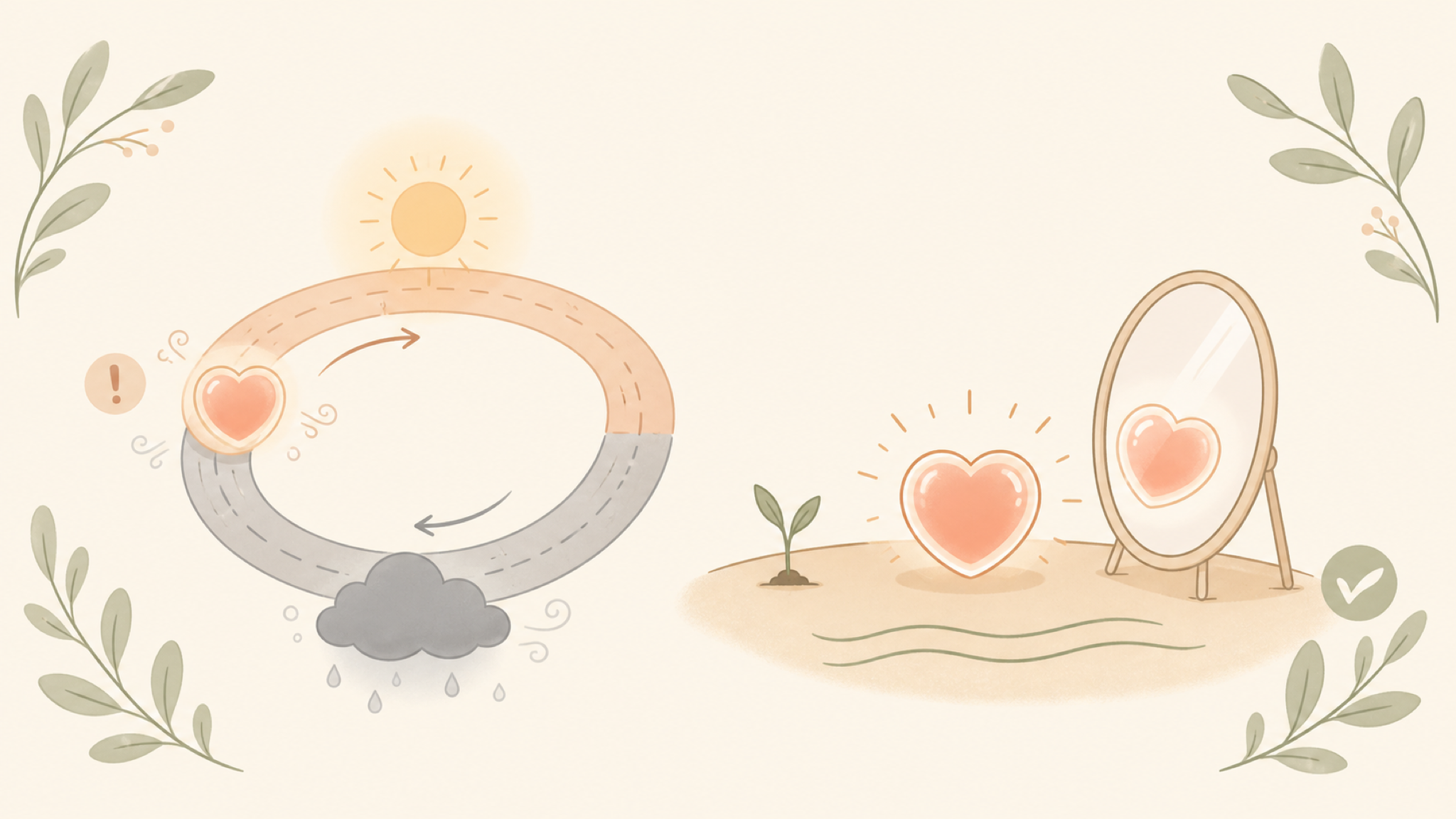
Recovery usually begins by rebuilding trust in your own judgment, and it tends to move in uneven steps rather than a straight line. When someone has spent months telling you that your read on reality is wrong, the repair is learning to believe yourself again. That is slow, ordinary work, and it is doable.
Professional support is one of the steadiest parts of it. For a survivor, trauma-informed therapy offers a safe place to process what happened and to settle a nervous system that has been on alert for a long time. Cognitive behavioral therapy, a structured method that helps you notice and reshape unhelpful thought habits, is commonly used to rebuild confidence after emotional harm. Separately, the Cleveland Clinic notes that psychotherapy is also the main treatment for narcissistic personality disorder itself, though that is the other person's work to do, not yours. You can browse the Cleveland Clinic's health library at my.clevelandclinic.org.
Alongside therapy, small daily habits rebuild the self that got worn down:
- Set one clear boundary and keep it, starting small. Boundaries are how you practice trusting your own limits again.
- Reconnect with one person or one activity the relationship pushed out.
- Expect a nonlinear timeline. Old anxiety can resurface weeks or months later as your body catches up.
- Offer yourself the plain kindness you would give a friend in the same spot.
That last habit is its own skill. If self-criticism is loud right now, learning how self-compassion answers low self-worth is a gentle place to begin.
When to reach out for professional help
Reach out sooner rather than later if the relationship is affecting your safety, your sleep, your work, or your grip on what is real. You do not need to reach some threshold of harm to deserve support. A few signs it is time:
- You feel unsafe, threatened, or trapped.
- Anxiety, low mood, or hopelessness has lasted for weeks.
- You have lost track of what you actually think or want.
- You are cut off from the people who used to know you well.
Two starting points cost nothing: the National Domestic Violence Hotline at 1-800-799-7233 for safety and next steps, and a primary care doctor or licensed therapist for ongoing support. If you are ever in immediate danger, call your local emergency number.
You do not need certainty to act
Acting on a pattern does not require a diagnosis or proof that fits a textbook. If what you read here felt familiar, the practical next move is small: talk to one person you trust, and if your safety, sleep, or mood is affected, contact the National Domestic Violence Hotline or a licensed therapist. Recovery from this kind of harm is possible, and the steps above are where it usually starts.
This article is for general information and self-care education only. It is not medical advice, diagnosis, or treatment. For questions about your health, talk to a qualified healthcare professional.