Push-Up Form and Which Muscles Each Variation Works
A push-up trains the chest, shoulders, and triceps while the core braces; here's how to set correct form and how variations target each muscle.
Table of contents
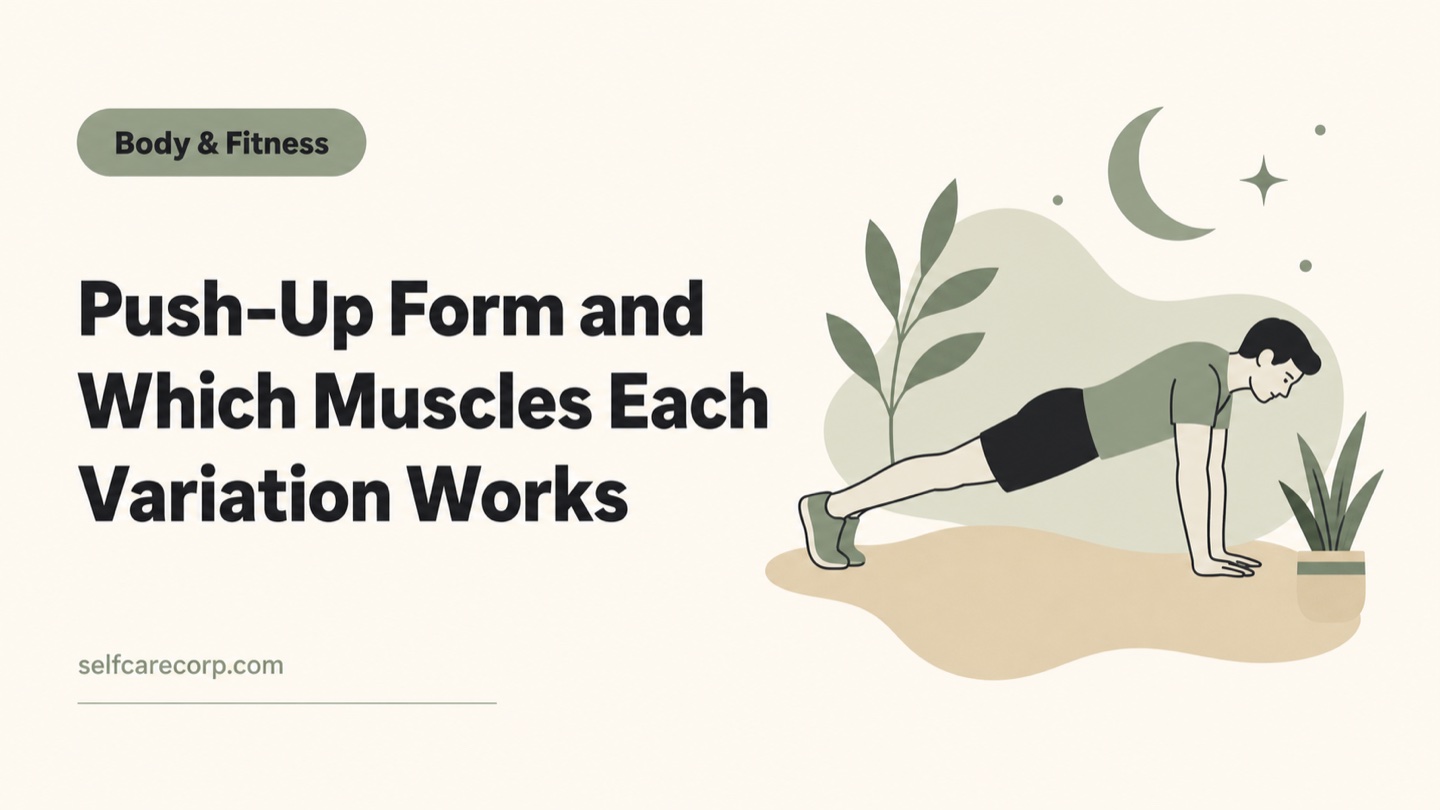
A push-up works your chest, shoulders, and triceps together while your core braces to hold your body in one straight line. Good form matters more than a high rep count: keep your hands about shoulder-width apart, tuck your elbows to roughly 45 degrees, and lower until your chest nearly touches the floor. Where you place your hands and feet then shifts the emphasis — a wider stance leans on the chest, a narrow diamond shape loads the triceps, and raising your feet loads the upper chest and shoulders. Muscle-activation research from the American Council on Exercise helps explain why. This guide covers bodyweight push-ups for everyday fitness, not a competitive strength or rehab program.
The muscles a push-up trains
Three muscles do the visible work. The pectoralis major, your broad chest muscle, drives the press. The anterior deltoids, the front of your shoulders, help push you off the floor. The triceps, on the back of your upper arm, straighten your elbows at the top of each rep.
Two more groups work in the background. The serratus anterior, along the side of your ribs, keeps your shoulder blades from winging out, and your core holds your hips level so the body stays in a plank. That is why a push-up feels like a full-body move even though your arms get the attention.
How to set up correct form
Start in a high plank with your hands flat on the floor, a little wider than your shoulders and fingers spread. Your body should form one straight line from head to heels, core braced and glutes gently squeezed so your hips neither sag toward the floor nor pike toward the ceiling. That same feel for pelvis position also shapes how you sit, something the guide on easing an anterior pelvic tilt from sitting covers.
As you lower, let your elbows travel back at about a 45-degree angle from your torso instead of flaring out to the sides. Flared elbows put the shoulder in a weaker position, while the tucked angle keeps the chest and triceps working. Go down until your chest is within an inch or two of the floor, then press back up without letting your hips lead.
How do variations target different muscles?
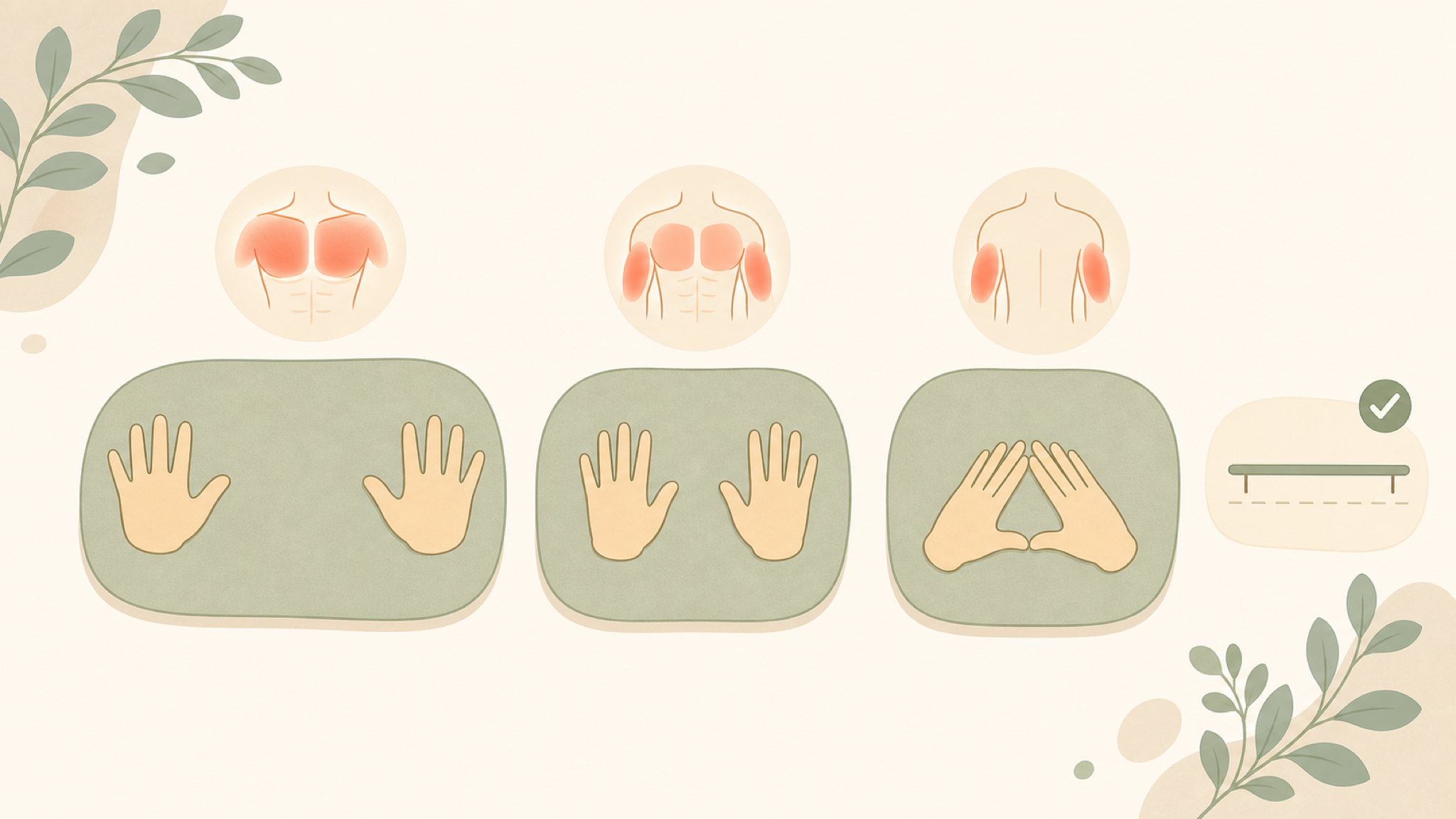
Small shifts in position move the load around, so you can steer a set toward one muscle with no equipment:
- Wide-hand push-ups set your hands well outside shoulder width and put more tension on the chest.
- Diamond, or triangle, push-ups bring your hands together under your chest so your thumbs and index fingers form a triangle, which loads the triceps. In an American Council on Exercise study of triceps exercises, the triangle push-up produced the most triceps activation of the moves tested.
- Decline push-ups, feet raised on a step or couch, put more weight over your upper chest and front shoulders.
- Incline push-ups, hands raised on a counter or sturdy table, take weight off your arms and make the movement easier.
- Pike push-ups, hips lifted high into an upside-down V, tip your torso forward so the shoulders carry most of the work.
Where should a beginner start?
If a full floor push-up isn't there yet, build up instead of grinding out sloppy reps. Start with incline push-ups against a wall or counter, drop to a lower surface as they get easier, and finish on the floor. Aim for reps where the last one still looks like the first, with a clean line and full range, rather than a fixed number. Two or three sets a few times a week is enough before you add harder variations.
This article is for general information and self-care education only. It is not medical advice, diagnosis, or treatment. For questions about your health, talk to a qualified healthcare professional.