Daily Habits That Support Mental Wellbeing
Moving a little, sleeping enough, staying connected, and noticing the present are daily habits that support mental wellbeing. Here's a simple place to start.
Table of contents
What counts as a habit for mental wellbeing?
A wellbeing habit is a small action you repeat until it stops needing a decision. It isn't a single big fix, and it doesn't have to be dramatic. Britain's National Health Service groups the most useful ones into five simple steps to mental wellbeing: connecting with other people, being physically active, learning new skills, giving to others, and paying attention to the present moment. None of these need special equipment or much time. What makes them work is that you do them often, not that you do them perfectly.
That's good news if you've tried and quit before. You aren't aiming for a new personality. You're trying to make one or two small things automatic, then letting them carry the rest.
Move your body, even a little
Movement is one of the steadiest habits for your mood. The World Health Organization recommends that adults get 150 to 300 minutes of moderate activity, or 75 to 150 minutes of more vigorous activity, spread across a week, plus muscle-strengthening work on two or more days. You can read the WHO's own guidance on its official site.
That target sounds heavy until you break it down. The lower end, 150 minutes, is about 22 minutes a day, or a brisk 30-minute walk five times a week. The WHO also notes that regular activity reduces symptoms of anxiety and depression and helps people sleep better. If a daily walk feels like too much right now, start with ten minutes after lunch and let it grow from there.
How much sleep do you actually need?
Most adults need at least seven hours a night. The U.S. Centers for Disease Control and Prevention recommends seven or more hours for adults aged 18 to 60, and it reports that about 1 in 3 adults sleep less than that. Short sleep quietly makes every other habit harder, because a tired brain has less patience, less focus, and a shorter fuse.
You can't force sleep, but you can shape the habit around it. Pick one wake-up time and keep it, even on weekends, so your body learns a rhythm. Dim the lights in the last hour and keep the phone out of reach of the bed. If your mind races at night, jotting down tomorrow's worries for a few minutes can help you set them aside.
How do I stay connected when I'm busy or tired?
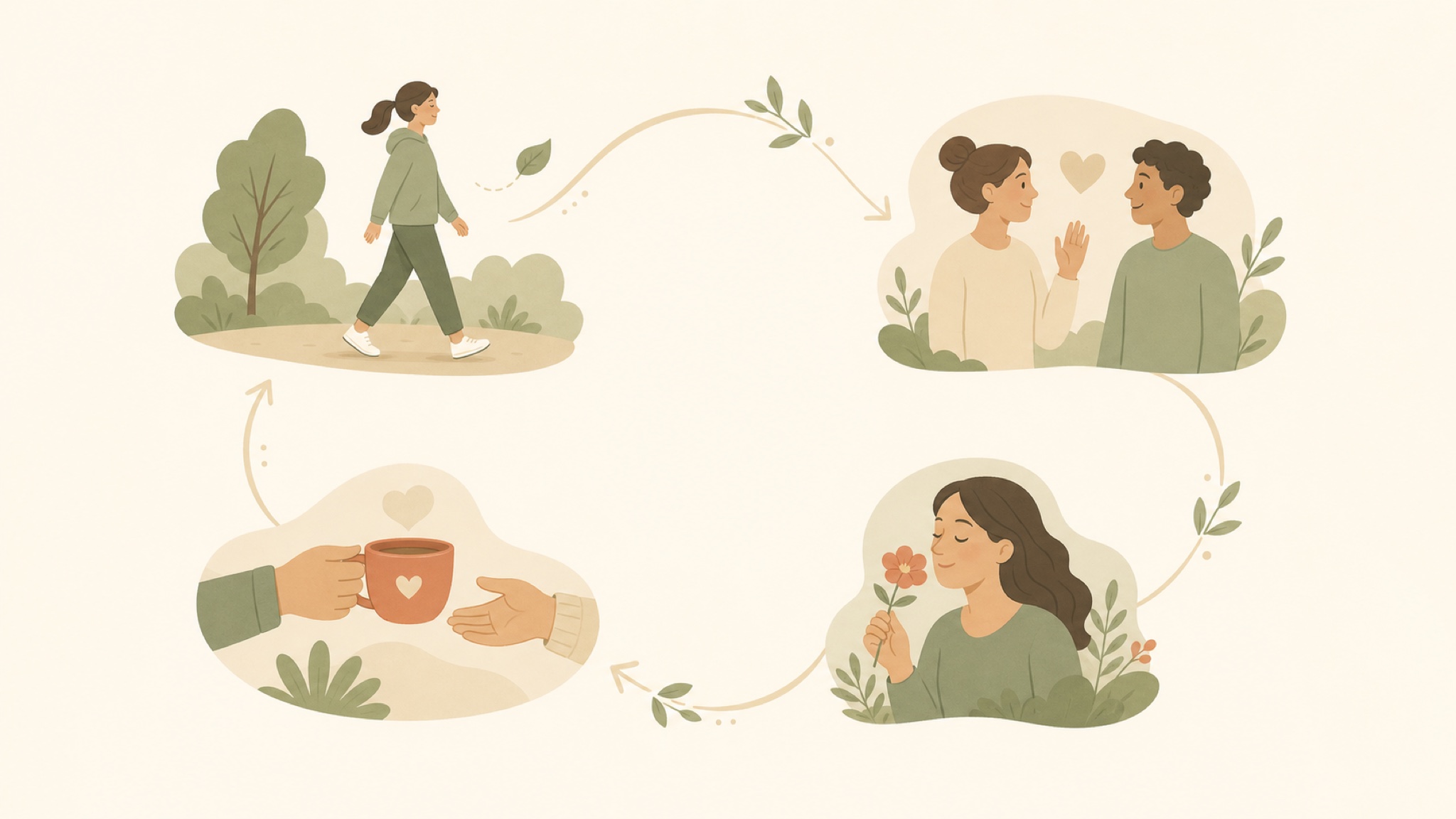
Aim for small, regular contact instead of rare big events. A two-minute message, a shared lunch, or a standing weekly call all count, and they're far easier to keep up than a packed social calendar. The point is a steady thread of contact, not a performance.
This matters more than it looks. The U.S. Surgeon General's 2023 advisory on social connection reported that loneliness is linked to a 29 percent higher risk of heart disease and a 32 percent higher risk of stroke, and described the health effect of weak social connection as comparable to smoking up to 15 cigarettes a day. You don't need a wide circle. Checking in often with just one or two people is enough to build the habit.
Notice the present, and do small good things
The last three NHS steps are quieter, but they add up. Paying attention to the present moment, what the NHS calls mindfulness, simply means noticing your thoughts, your body, and what's around you instead of running on autopilot. You can practice it while washing dishes or walking to the bus. Even two honest minutes count.
Giving and learning work the same way. Thanking one person, listening when someone needs it, or offering a small hand builds a sense of purpose. Picking up one new skill, even a recipe or a few words of a language, gives you something to grow into. None of this needs a schedule. It needs the habit of catching the small chance when it shows up.
A simple daily starting point
If you want a concrete place to begin, here's a small daily version of each habit and what the research links it to. Treat it as a menu, not a checklist. Choosing one row is a better start than trying all five at once.
| Habit | A small daily version | What it is linked to |
|---|---|---|
| Move | A 20 to 30 minute walk | Lower anxiety and depression (WHO) |
| Sleep | Same wake-up time, 7-plus hours | Better mood and focus (CDC) |
| Connect | One message or short call | Lower isolation risk (Surgeon General) |
| Notice | Two minutes of full attention | Present-moment awareness (NHS) |
| Give | One small kindness | A sense of purpose (NHS) |
Building a habit that lasts
The easiest way to keep a new habit is to attach it to something you already do. Walk right after lunch. Text a friend while the kettle boils. Do your two minutes of noticing while you brush your teeth. Stacking a new habit onto an old one means you don't have to remember it from scratch every day.
It also helps to see your progress somewhere. Writing things down keeps a habit honest, and a short daily note is plenty. If you're not sure where to begin, starting a small daily writing habit can make the others easier to hold onto, and keeping a simple record of your mood and sleep shows you which changes are actually working for you.
Start with one habit and give it two weeks before you add another. Some days you'll skip it, and that's fine, because a missed day isn't a failure, it's just a day. If low mood, anxiety, or sleep trouble sticks around and gets in the way of daily life, treat these habits as support, not a replacement for talking to a doctor or a mental health professional.
This article is for general information and self-care education only. It is not medical advice, diagnosis, or treatment. For questions about your health, talk to a qualified healthcare professional.