Peeled Garlic Botulism Recall: Safety and Symptoms
Tops Markets recalled Christopher Ranch and Garland peeled garlic over possible botulism. Here's what was pulled, symptoms to watch, and safe storage tips.
Table of contents
In early 2026, Tops Friendly Markets recalled all product codes of Christopher Ranch Peeled Garlic and Garland Fresh Peeled Garlic after the product may not have been held cold enough, which can let Clostridium botulinum grow. That bacteria is the source of botulism. The FDA classified the recall as Class I, its most serious recall category, which the agency defines as a situation in which there is a reasonable probability that using the product will cause serious adverse health consequences or death. The FDA recall notice tells shoppers not to eat the garlic even if it looks and smells normal, and to return it for a refund. As of July 2026, no illnesses had been linked to it.
This is a short, practical guide to what the recall covers, why fresh peeled garlic can carry this risk, the symptoms public-health agencies describe, and a few easy habits for storing garlic at home. It is general food-safety information for everyday readers, not medical advice or a diagnosis. If you feel sick, the steps below point you toward care.
What products were recalled, and where?
The recall covers two brands sold through one grocery chain. According to the FDA recall notice, Tops Friendly Markets pulled Christopher Ranch Peeled Garlic in the 6-ounce size (UPC 74574-10852) and Garland Fresh Peeled Garlic in the 6-ounce size (UPCs 71894-00000 and 68826-75340). Every product code date is included, so there is no safe batch to look for. The garlic was sold at Tops stores in New York, Pennsylvania, and Vermont.
If one of these packages is in your kitchen, the safest move is to not taste it. Return it to Tops for a full refund. The recall notice lists Tops Consumer Affairs at 800-522-2522 for questions. If you already tossed the package but remember buying peeled garlic there recently, it is reasonable to skip it and pick up a fresh bulb instead.
Why peeled garlic can carry a botulism risk
Botulism is a rare but serious illness caused by a toxin, a natural poison, that attacks the body's nerves. The toxin comes from Clostridium botulinum, a bacteria that lives in soil and can cling to produce as tough, dormant spores. Think of spores as the bacteria in sleep mode: they ride along on garlic and other vegetables and only wake up when conditions are right.
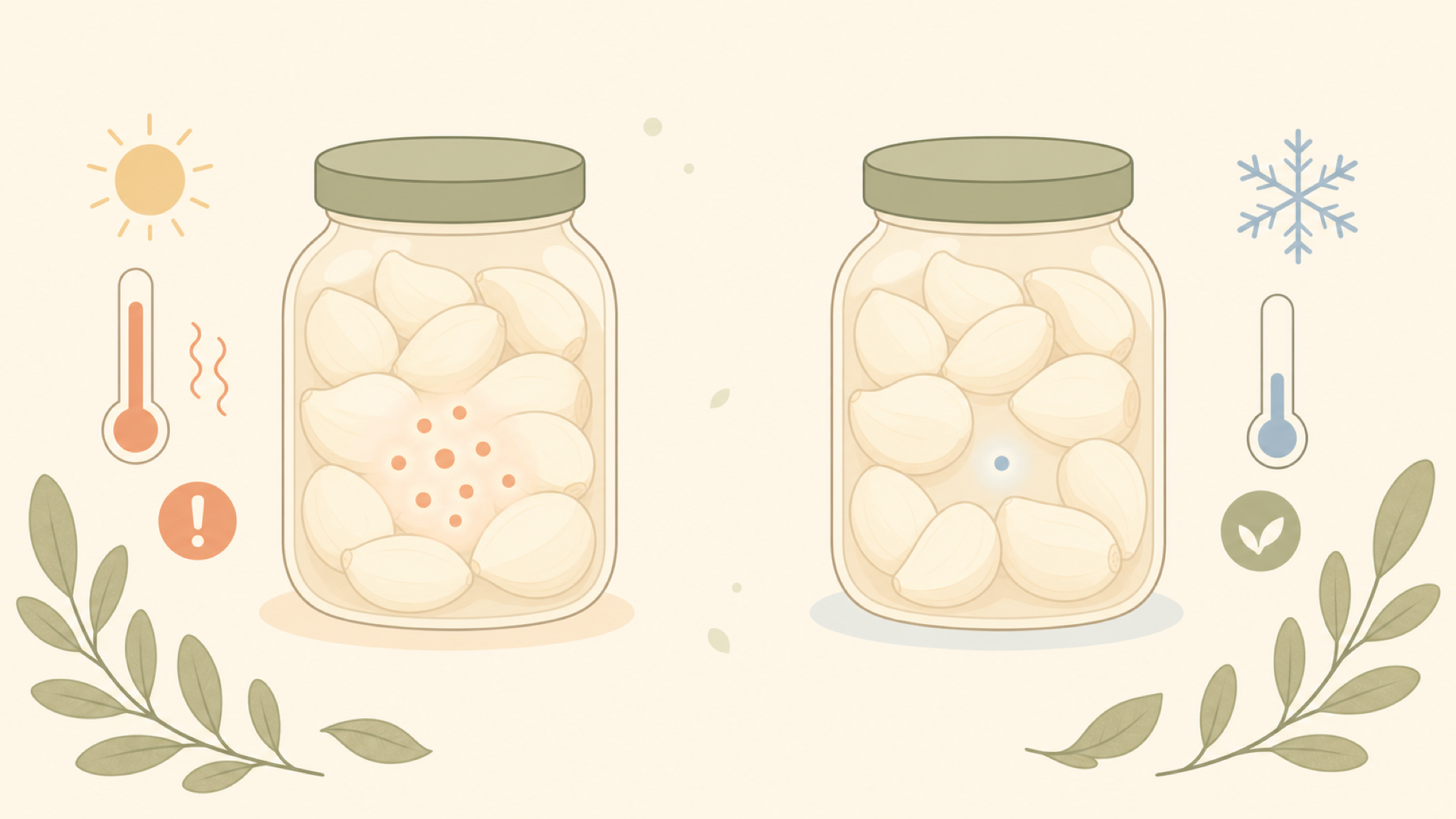
Those conditions are low oxygen, low acid, little competition from other microbes, and enough warmth. Fresh peeled garlic that sits too warm checks several of those boxes, which is why the recall points to temperature. According to the FDA recall notice, the recalled garlic was held in open-air coolers rather than kept cold at the 32 to 37°F (0 to 3°C) that peeled garlic needs, and that extra warmth is the kind of condition that can let the bacteria grow. Refrigeration is the everyday safeguard, because keeping garlic cold slows the spores so they do not produce toxin. The unsettling part, and the reason recalls happen at all, is that the toxin does not change how food looks, smells, or tastes. You cannot sniff or eye your way to safety with this one.
Homemade garlic in oil deserves the same caution
If you like making your own garlic-infused oil, this is the kitchen habit worth double-checking. Oil seals garlic away from air, which creates the low-oxygen pocket those spores prefer, and garlic is naturally low in acid, the same recipe for trouble the recall highlights. The USDA's Food Safety and Inspection Service recommends keeping homemade garlic-in-oil in the refrigerator at 40°F (4°C) or below, using it within a few days, and never leaving it out at room temperature for more than two hours.
Store-bought garlic-in-oil is a different story. Commercial makers add an acid, such as citric or phosphoric acid, to lower the pH enough to hold the bacteria in check, which is how those jars stay stable on a shelf. Homemade versions skip that step, so they lean on the fridge and a short shelf life instead. Here is a simple way to keep the timing straight:
| Garlic form | Where to keep it | How long |
|---|---|---|
| Whole unpeeled bulb | Cool, dry, airy spot | Several weeks |
| Fresh peeled cloves | Refrigerator, 40°F or below | By the package date |
| Homemade garlic in oil | Refrigerator, 40°F or below | A few days; never out over 2 hours |
What symptoms should you watch for?
Watch for signs that show up in the eyes, mouth, and muscles. The CDC describes classic botulism symptoms as double or blurred vision, drooping eyelids, slurred speech, trouble swallowing, a dry mouth, and muscle weakness. With foodborne cases, some people also feel nauseated or deal with vomiting, stomach cramps, or diarrhea first.
Timing helps you take it seriously. The CDC says symptoms usually begin 12 to 36 hours after eating contaminated food, though they can appear anywhere from a few hours to several days later. Botulism is a medical emergency. The CDC's guidance is to see a doctor or go to the emergency room right away, because untreated botulism can progress to paralysis of the muscles used for breathing, and earlier treatment shortens the illness. If you think you ate recalled garlic and any of these signs appear, do not wait it out at home.
Simple steps to handle garlic safely at home
None of this needs to make garlic scary, since it is one of the friendliest ingredients in the kitchen. A few small habits cover the risk without much thought:
- Check your fridge and pantry for the recalled Christopher Ranch and Garland peeled garlic, and return it rather than tasting it.
- Keep peeled or chopped garlic in the refrigerator, not on the counter, and use it by the package date.
- Make garlic-in-oil in small batches, refrigerate it right away, and use it within a few days.
- Do not leave garlic-in-oil, or dishes made with it, sitting out for more than two hours.
- When you are unsure how long something has been out, let it go, because the toxin gives no warning smell or taste.
For anything current on this or future recalls, the FDA keeps an updated list on its recalls and safety alerts page, and the CDC's botulism resource walks through symptoms and treatment in more detail. When a favorite staple gets recalled, the calm response is the same one that keeps most food safe: keep it cold, keep it fresh, and when in doubt, throw it out.
This article is for general information and self-care education only. It is not medical advice, diagnosis, or treatment. For questions about your health, talk to a qualified healthcare professional.